Thoughts
The IT executive’s role: making technology a business conversation
What role should IT executives play when a business must adopt a new platform, whether purchased from a vendor or developed elsewhere in a global organization?
IT is often seen as the tip of the spear in innovation: introducing possibilities, evaluating platforms, and explaining what technology could enable. We have long understood that IT cannot drive the resulting business change alone. But our role must also go beyond providing the technology.
The business needs to understand what it is taking on. What assumptions does the platform make? How will decisions and responsibilities change? Where do local conditions require a different approach?
An IT executive needs to help bring these questions to the table—and sometimes help the business answer them.
A change in inventory flow
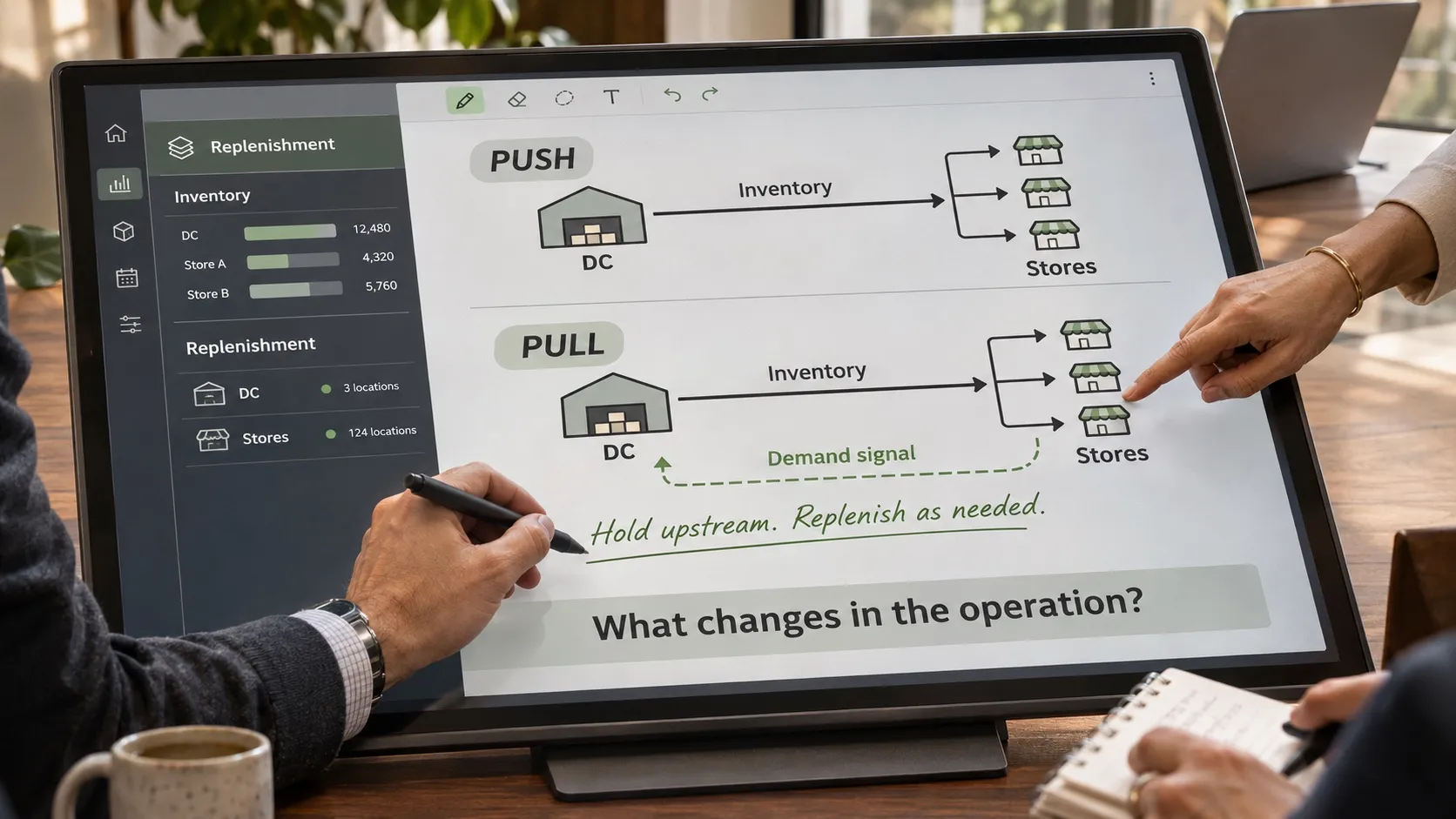
While implementing a demand planning and replenishment platform, we needed to examine more than data and interfaces. We also needed to discuss how inventory should flow.
The established approach emphasized pushing inventory downstream, from distribution centers toward stores, minimizing handling and avoiding holding inventory in upstream DCs.
The new approach allowed inventory to remain upstream, with downstream locations pulling it according to their needs.
That was a meaningful departure from established practice, raising operational and financial questions well beyond the system configuration under IT’s responsibility.
As the IT partner to Supply Chain leadership, I helped diagram the flows and make the implications easier to discuss. Putting the alternatives on the same page helped us examine what the change would require.
My contribution depended on understanding the platform well enough to explain its implications and our processes well enough to recognize the differences. The operating decisions needed the business’s ownership.
IT initiatives involve much more than IT
IT executives need technical depth, business understanding, and the relationships to work through these decisions with the people responsible for the operation.
Whether adopting a vendor’s platform or extending a corporate platform into a local market, we rely on the provider’s knowledge of the technology and experience implementing it elsewhere. The receiving teams bring knowledge of their operations, constraints, and exceptions. IT leadership helps connect those perspectives, clarify tradeoffs, and turn them into workable decisions.
That requires shared responsibility from the beginning. Business leaders must help define and lead the operating changes. IT must remain involved beyond deployment as the platform becomes part of everyday work.
This is some of the most interesting work in technology leadership: understanding the tools, understanding the business, and helping people figure out together how the two should work.
When your organization adopts a new platform, who is leading that conversation?
Originally published on LinkedIn.